Have you heard the good news?
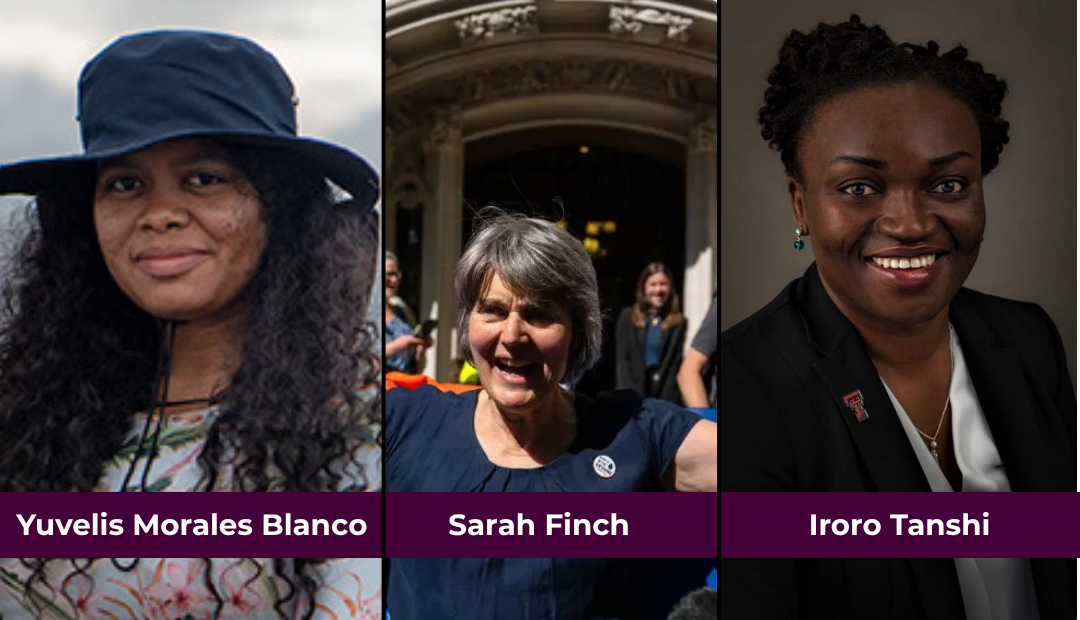
This week, a 24-year-old Colombian woman named Yuvelis Morales Blanco stopped some of the world's biggest oil companies from bringing commercial fracking into her community. Sarah Finch spent over a decade fighting oil drilling in southeastern England and won a Supreme Court ruling that now requires authorities to consider fossil fuels' global climate impact before approving extraction. And Iroro Tanshi rediscovered an endangered bat species in Nigeria and has been fighting ever since to protect the forest sanctuary it calls home. All three just won the 2026 Goldman Environmental Prize — and for the first time in the award's 37-year history, every single recipient is a woman.
None of them waited for permission. None of them had a guaranteed outcome. They just knew what they knew — and they refused to logic themselves out of it.
That's the thread running through all of this week's good news. Let's take a look.
Scotland's Seabed Is Coming Back to Life After a Bottom Trawling Ban: Nearly a decade after Scotland established the South Arran Marine Protected Area and banned bottom trawling across much of it, scientists have found three times more seabed organisms and twice as many species compared to nearby unprotected waters — with over 1,500 organisms discovered in just 100 liters of sediment.
15 Million Oysters Are Being Released Into the North Sea in One of the UK's Biggest Rewilding Projects: The Green Britain Foundation, in partnership with the Nature Restoration Fund and Marine Fund Scotland, is releasing over 15 million juvenile oysters near Orkney using a unique onshore rearing process — with the goal of re-establishing a massive oyster bed covering more than 100 hectares that could sequester up to 76 tons of CO₂ per year.
Chornobyl's Exclusion Zone Has Become One of Europe's Most Thriving Wildlife Sanctuaries: Forty years after the world's worst nuclear disaster, the Chornobyl exclusion zone and its neighboring Belarusian reserve have become an unplanned nature sanctuary spanning nearly 5,000 square kilometers — with wolf populations seven times higher than before the accident, and elk, deer, and rabbit populations flourishing.
Ecuador's Tropical Rainforest Has Bounced Back to Over 90% of Its Original Biodiversity in Just 30 Years: A new study published in Nature found that tropical rainforest biodiversity in Ecuador's lowland Chocó region — one of the most biodiverse places on Earth — rebounded to over 90% of its original levels within about 30 years after agricultural use stopped, with mobile animals like birds, bats, and bees returning fastest, followed by trees, and eventually soil organisms. Species composition — the exact ecological mix — recovered to about 75% similarity to primary forest after three decades, meaning full recovery takes longer, but the speed and scale of regeneration far exceeded what many scientists expected.
Sarah Finch (UK) — The Woman Who Changed How Britain Approves Fossil Fuel Projects Forever: Sarah Finch spent five years fighting an oil drilling project at Horse Hill in Surrey after discovering that its environmental impact assessment completely ignored the climate impact of actually burning the oil it would extract — what's known as Scope 3 emissions. Her grassroots campaign with the Weald Action Group culminated in a landmark 2024 UK Supreme Court ruling — now called "the Finch ruling" — that declared Surrey County Council acted unlawfully and established that all new UK fossil fuel projects must now account for their full lifecycle climate impact.
Alannah Acaq Hurley (Alaska, USA) — Indigenous Leader Who Stopped One of the Most Destructive Mines on Earth: Alannah Acaq Hurley organized 15 Indigenous nations and thousands of local Alaskans to fight the proposed Pebble Mine — a massive copper and gold mining project that would have devastated the Bristol Bay watershed, home to the world's largest sockeye salmon fishery and a cornerstone of Indigenous food sovereignty and culture. Her relentless advocacy contributed directly to the EPA's 2023 veto of the mine, protecting one of North America's most ecologically critical and culturally sacred landscapes.
Borim Kim (South Korea) — The Youth Activist Who Took Her Government to Court Over Climate — And Won: Borim Kim, through her organization Youth 4 Climate Action, helped lead South Korea's first successful youth-driven climate lawsuit, organizing young plaintiffs and building public pressure that forced a reckoning at the highest levels of government. In 2024, South Korea's Constitutional Court ruled that the government's existing climate targets were unconstitutional — ordering the state to set stronger, legally binding emissions-reduction commitments.
Yuvelis Morales Blanco (Colombia) — The Teenager Who Stopped Fracking Before It Started: As a teenager, Yuvelis Morales Blanco co-founded the youth movement Aguawil and joined the Colombia Free from Fracking Alliance, organizing protests, sit-ins, public hearings, and community education campaigns against Ecopetrol and ExxonMobil fracking pilots threatening the Magdalena River and her hometown of Puerto Wilches. Her activism contributed to court decisions suspending the projects, a national moratorium on fracking, and a Constitutional Court ruling that the pilots violated the community's right to free, prior, and informed consent. She didn't wait until she was old enough to vote to protect her land — she organized, she showed up, and she won.
Theonila Roka Matbob (Papua New Guinea) — The Woman Holding Rio Tinto Accountable for Decades of Destruction: Theonila Roka Matbob has spent years gathering community testimony and leading efforts to hold mining giant Rio Tinto accountable for the environmental and human rights devastation caused by the Panguna mine on the island of Bougainville — a mine whose toxic legacy has poisoned land and water for generations. Her 2020 complaint and sustained advocacy contributed to Rio Tinto signing a 2024 memorandum of understanding to begin addressing some of the damage it left behind
Iroro Tanshi (Nigeria) — The Scientist Who Built a Zero-Wildfire Zone to Save a Critically Endangered Bat: Dr. Iroro Tanshi rediscovered the critically endangered short-tailed roundleaf bat in Nigeria in 2016 and identified human-caused wildfires as its primary threat to survival — then did something about it, launching a "zero wildfire" campaign with local communities around the Afi Mountain Wildlife Sanctuary, creating forest guardian brigades, deploying weather data and early-warning systems, and reforming local burning practices. From 2022 to 2025, her teams successfully extinguished over 70 fire outbreaks and prevented any serious wildfires from reaching the sanctuary, protecting both the rainforest ecosystem and the surrounding farmland communities.