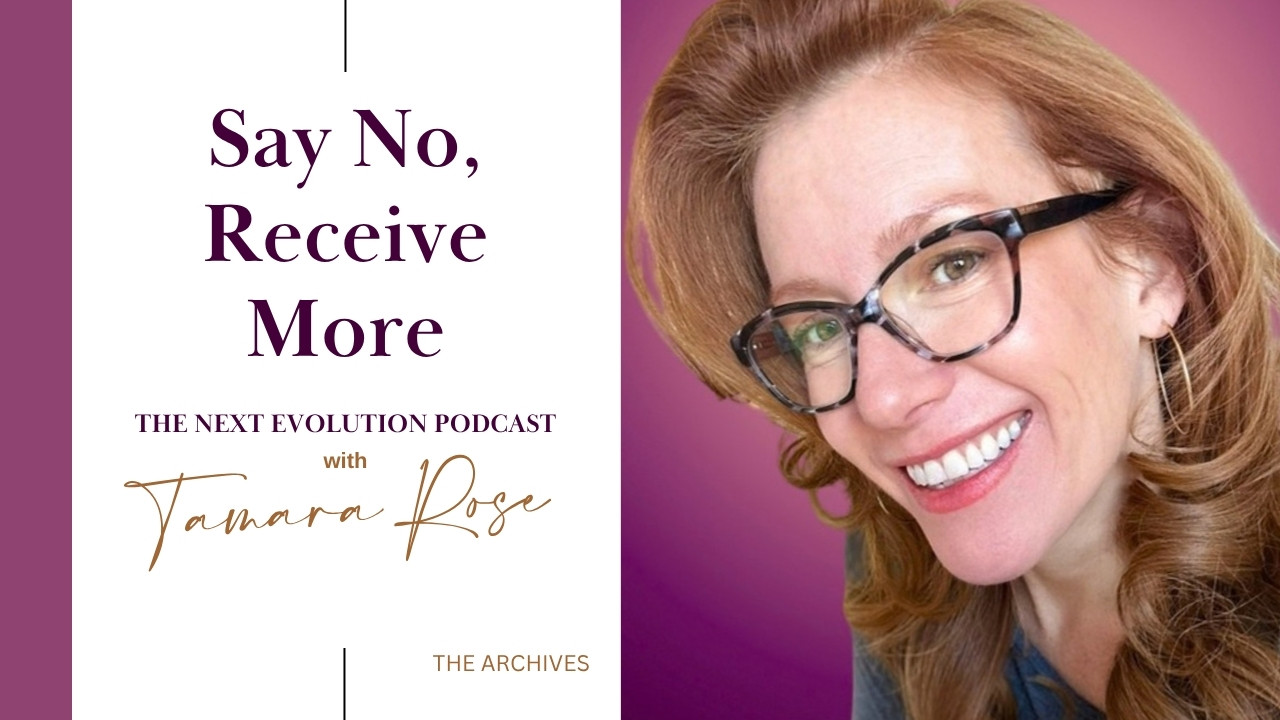
 with Tamara Rose
The Next Evolution · From the archive
How to Stop People Pleasing: The Art of Saying No and Letting Yourself Receive
Listen on Apple Podcasts · Spotify · YouTube
Get every new episode in your inbox.
If you give until you're empty and then feel guilty for needing anything back, you're far from alone, and there is a reason for it. This episode is about learning to receive, saying no without the guilt and letting other people carry some of the load.
What you'll hear
Tamara explains why receiving is so hard for most women, what it looks like when you're blocking it, and what receiving actually feels like in your body. Then she gets practical: calming your nervous system, saying no more often and directing your energy with clear parameters, so your needs get met and everyone else's still do too.
Why women struggle to receive
Most of us were taught that it's better to give than to receive, at home, at church and at school, and inside that structure our value and worth got tied to how much we do. Women are also wired to care for everyone in our field and think about how our actions affect them, so receiving drops to the bottom of the list. Watch what happens when someone gives you a compliment. You brush it off ("Oh, this old thing?") because somewhere underneath, you believe there isn't enough praise to go around, and if you're the greatest thing since sliced bread, someone else can't be.
Signs you're blocking your ability to receive
The main sign is doing too much and burning out. From there, check the smaller things. Can you receive a compliment, or criticism from a stranger on the internet, or feedback at work? Can you receive more money, or a gift so big it feels uncomfortable, without guilt, shame or making yourself wrong for it?
When you put everyone else's needs first, your own go on the back burner; Tamara admits she forgets to eat. Think of your energy as a tank. As you let yourself receive attention, rest, food, water and time for yourself, the tank fills, your needs get met, and a new question becomes possible: what do I actually want? So many women have never been asked that question, because they've been kept running on empty.
What it means to receive
Take a big breath in, fill your whole body, and exhale. That slightly stiller, calmer state is a snippet of receiving. Notice how, when you sit quietly on the couch doing nothing, the pet, the kid or your partner comes to you. From there you tune what you receive, like adjusting a satellite dish to the channel you want. Tamara also describes it as standing in the rain with your arms open, without an umbrella and without a story about the rain. If you deflect one kind of energy, you may be deflecting the money, the success and the ease along with it.
How to say no, and why parameters work better than boundaries
It starts with calming your nervous system, because when you're regulated, you attract from ease instead of from not enough time or not enough money. Then say no more often. Just because you can do it all yourself doesn't mean you should, so sit on your hands, stop offering, let someone else learn and trust that they'll figure it out, even if they do it differently, or better, than you would.
Tamara doesn't love hard boundaries, because a boundary often comes from feeling powerless: they're doing this to me, so I have to stop it. A parameter keeps you in your power. "This doesn't work for me, this is what I'm requesting instead, and if it continues, this is what I'll do." Then you follow through. That clarity tells the universe exactly what you want, while saying you hate something and staying in it for ten years tells it you like it. A five minute meditation in the morning and evening is the place to start practicing. Want to go further? Read why you know what to do but can't make yourself do it.
In this episode
- 06:23 The nature of competition and survival
- 14:17 Hustle culture and its effects on women
- 19:52 Signs you're blocking your ability to receive
- 24:25 Defining what it means to receive
- 30:39 Embodying the energy of receiving
- 32:25 Regulating the nervous system
- 34:11 The power of saying no
- 37:05 Boundaries vs. parameters
- 40:33 Directing energy in relationships
- 48:43 Receiving vs. doing
- 1:00:06 Meditation as a tool for receiving
Get every new episode in your inbox.